Skip to content
  • Workplace & Career
  • Pop Culture
  • Social Media
  • Marketing
  • Parenthood

Unknown's avatar
Rikki Rogers is a writer, marketer, and career-loving parent living outside of Washington, DC.

Categories

  • Corporate Culture
  • Marketing
  • Parenthood
  • Pop Culture
  • Social Media
  • Uncategorized
  • Working It
  • Working It
  • Pop Culture
  • Marketing
  • Social Media
  • Parenthood
  • Uncategorized
  • Corporate Culture

Rikki writes.

Feminism, marketing, business, media, and their intersections

  • Workplace & Career
  • Pop Culture
  • Social Media
  • Marketing
  • Parenthood
  • Pop Culture
  • Social Media

It May Not Have Levar Burton, but Goodreads is the New Reading Rainbow

rikkirogers's avatar rikkirogers September 25, 2011

Remember Reading Rainbow?  It was a television show…about reading.  Even though I was quite young when this show aired (we both premiered in 1983), I remember watching it and thinking, “There is something odd about this.  Shouldn’t I be reading books?”

But Reading Rainbow had the right idea.  The 1980’s were a great time for children’s television: Fraggle Rock, Inspector Gadget, He-Man and She-Ra all debuted in the 1980’s.  The founders of Reading Rainbow decided to leverage the increase in children’s television viewing to promote reading, instead of throwing their hands up and concluding that television was literature’s nemesis.

Goodreads, a social networking site that allows people to share what they’ve read and view what their friends have read, followed Reading Rainbow’s lead.  Founded in 2006, it jumped on the social media train just a couple of years after it started picking up serious steam.  The logic behind Goodreads is essentially the same logic behind the Facebook “like” button. (In fact, you’ll soon be able to connect your Goodreads profile to your Facebook profile.)  We are more interested in the recommendations of our friends than of strangers, and so if my friend has read a book, I might be interested in reading it too. Building off of the power of a good suggestion, Goodreads has made headlines in the last few weeks after it launched a Netflix-like recommendation system.

Goodreads takes advantage of the most popular features of social media, including “The Legitimization Effect.”  There’s something very satisfying about closing a book (or reaching the last screen on my Kindle) and then clicking “I’m finished” on Goodreads.  It simultaneously gives me a sense of accomplishment and lets me brag about being a fast reader (in your face, world!).

The site is also spot-on in making it easy for users to buy, buy, buy (something that Facebook hasn’t always been great at).  When a Goodreads user finds a book she likes, she can quickly click on clearly visible links to Barnes and Noble, Amazon, and eBay (among others) and even compare pricing without leaving the Goodreads site.

Even though Goodreads, like any business, has a commercial purpose, it is using new media to promote reading and the appreciation of literature, an idea that me, and around 6 million other Goodreads users, are firmly behind.

It seems like every time a news story airs about the damaging effects of excessive online activity, people get all fire and brimstone on social media.  Yes, it’s true, we shouldn’t be spending all day every day on Facebook, stalking people we barely know or posting every move we make.  But Goodreads is an example of how more traditional forms of learning and media, like literature, can peacefully and symbiotically coexist with new media.
  • Marketing
  • Working It

Gender Bias: Alive, Well, and on a T-Shirt

rikkirogers's avatar rikkirogers September 21, 2011

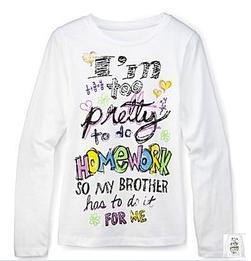
This t-shirt, along with a number of other controversial clothing items from several retailers, has caused an uproar among social media activists.  I write about my response to the t-shirt wars in my latest piece for The Daily Muse.  You can check it out here.

  • Pop Culture

Everything in Moderation, Including Ironic Reference: Why You Can’t be Funny Like Family Guy

rikkirogers's avatar rikkirogers September 16, 2011

I’m not a big fan of Family Guy. I realize that some find it hysterical, timely, cutting edge, and I respect that, but I’m not in love. Mostly because I think ironic reference is only funny in moderation.

Here’s an example of an ironic reference from Family Guy:
This is a classic, oft-quoted scene.  It’s funny because the Kool Aid man's surprise entrance quickly reminds us (the twenty and thirty somethings that watch the show) that the Kool Aid man did say "Oh yeah!" on those commercials all those years ago.  We find it funny, and we’re satisfied because we “get it.” Perhaps the problem I have with Family Guy isn't a result of the references themselves, but of their effects in the real world.  Because of Family Guy’s pervasiveness in pop culture, everyday individuals--particularly the show's enraptured followers-- have started giving ironic reference a try in conversation. The problem is, talented writers craft Family Guy’s jokes, and most everyday people are not writers. Or talented. Or funny. Here’s an example of real-life ironic references gone bad.  Me: I think I'm going to try to nab one of those cookies from the executive meeting this morning. My Coworker: Okay, Donovan.  Gonna nab it and throw it into the end zone? Me: What? My Coworker: Donovan McNabb.  You said Nab.  So I called you Donovan.  Get it? Me: I'm not hungry anymore. The tendency to try to implement ironic reference in everyday conversation is propelled by the way social media, the internet, and instant access to information are changing the way we think.  When we search on Google or jump from one video to another on YouTube based on links and recommendations, it’s easy to quickly transition from one disparate topic to the next.  The internet is like a rabbit hole that we leap into head first, forgetting a few feet in exactly what we were looking for. When Family Guy compares two completely different scenarios to suggest a similarity between them (the definition of a metaphor!) it's the absurdity of their differences that makes us laugh. This clip is an example of standard family guy simile.
The set up of most ironic references conform to the same pattern used in the Kermit the Frog clip. One of the characters makes a statement ending with “like the [something completely random]” and then the scene cuts to a different time and place so the viewer can see the completely random scene enacted. Because we're engaged with the visual of the scene and find it funny to see an icon from our childhood, typically known to be sweet and rainbow-loving, cast as a threatening racist, we laugh at this ironic reference without thinking about how it's related to what Peter just said. By the time the Kermit scene ends we've probably forgotten what Peter just said. We don't need to retrace our steps to find the connection. But when real-life people try ironic reference, we don't have all these visual cues or, usually, the effortless transition. And no one likes backtracking, trying to find the connection, only to discover that it's not funny anyway. To wrap it up á la Family Guy, check out this podcast from On The Media, which is tangentially related to what I've been talking about.
  • Working It

How to Work with Your Significant Other

rikkirogers's avatar rikkirogers September 11, 2011

I’ve been working with my husband for almost 2 years, and I’m frequently asked how we handle it.  In my most recent piece for The Daily Muse, I share my thoughts on staying sane when you share a house and an office with your loved one.  You can check it out here.

  • Working It

TMI: How to Deal with an Oversharing Boss

rikkirogers's avatar rikkirogers September 6, 2011

Have you ever experienced workplace TMI?  Check out my latest piece for The Daily Muse for some best practices on handling over-sharers.  

  • Social Media

Should We Let Facebook in the Classroom?

rikkirogers's avatar rikkirogers September 2, 2011

I didn’t have it too bad in high school. I had several things going for me: great relationships with my mom, dad, and sister, a series of mostly well-mannered boyfriends who maintained the appearance of being interested in me outside of their cars’ backseats, and a stellar report card. I wasn’t spoiled, but I did have quite a few amenities: a used car, a cell phone, a new prom dress every year. Aside from a few isolated episodes, I stayed away from trouble, and trouble stayed away from me.

But like every American teenager, I did have my fair share of high school drama, and when I wanted to express my angst, I wrote poetry. There were injustices in the world—boys occasionally did not return my calls, my curfew was a full hour earlier than that of my friends, the gas station that sold me cigarettes was shutting down—and these injustices needed to be released via the written word. The blood jet is poetry, there is no stopping it, I thought, as I put on my Ani Difranco CD and scribbled in my composition notebook.

Most of my friends in high school did not share my love of writing and had a particularly strong aversion to poetry. I remember one classmate lamenting over a sonnet: “Why doesn’t Shakespeare just say what he means?”

Because the overwhelming majority of my peers found poetry frustrating and deliberately vague, I rarely shared my work with my friends.  There was, and still is, an unfortunate stigma attached to creative writing, especially poetry, among teenagers.  Expressing oneself in poetry is the antithesis of the “whatever” culture, which dictates that too much enthusiasm for anything is un-cool.

And yet, based on the Facebook status updates of the few high schoolers I am friends with (mostly family friends’ kids– I’m not creepy), young people are currently expressing themselves in writing several times an hour. Sure, status updates aren’t poetry, and abbreviations and emoticons abound, but these kids are creating—inventing and reinventing their identities through photos, status updates, shared content, and comments.

The experts are saying that social media has become an addiction for young people, especially young girls, and has detrimental effects on their psyches. (I’ll admit that I am exceedingly grateful that I graduated high school well before the dawn of Facebook and Twitter.) Still, doesn’t it make sense to incorporate social media into Language Arts education, to encourage students to approach social media—and all media—with the same critical eye necessary to analyze literature?

Experimental and New Media Poetry, which departs from the printed page and is created and distributed electronically, seems well-suited for this endeavor. It’s fluid, it’s interactive, it elicits and often requires reader participation. Incorporating a social element into the study of poetry is a completely natural and industry-acceptable move, as most MFAs and PhDs in creative writing would tell you: workshop, feedback, and sharing is their life.

But instead some states seem hell-bent on legally preventing teachers from interacting with their students via social media. Their reasoning is that preventing “private” or “exclusive” interaction between teacher and student protects children from sexual predators. The public school system, they say, has an obligation to protect students from sexually aggressive teachers.

Obviously, I’m not an advocate for sexual predators. But most teachers are not sexual predators nor would they ever dream of having an inappropriate exchange with a student. There are many teachers out there–creative, motivated, dedicated teachers—that want to engage children and help them see that their social experiences are worth putting in writing. Why not let them use social media to their advantage?

  • Marketing

What Can We Learn From @whitehouse’s Tweets?

rikkirogers's avatar rikkirogers August 25, 2011

Please check out “What Can We Learn from @whitehouse’s Tweets?“, my second piece on The Daily Muse.  In it I discuss how the White House leveraged Twitter during the debt ceiling crisis and what we can learn from their use social media.

  • Pop Culture

What Happens to Words When They Become “Real” Words?

rikkirogers's avatar rikkirogers August 24, 2011

The OED has recently added a number of words to its dictionary, including sext, mankini, retweet, jeggings, and the symbol for heart (<3). The inclusion of words used in social media (like retweet) is evidence that social media is making an impact on our language, and the need to update the dictionary periodically shows that language is fluid, constantly transforming with our culture.  The OED’s purpose is to serve as a historical dictionary, tracing words back to their origins, updating definitions as the usage of a word changes, and adding new words as they become common in the English language.   But, as a writer, I have to ask—is there any danger to (or any value in) adding every pop-culture term to the dictionary?

To start thinking about this question, I headed to the OED online to find out how a term becomes eligible for inclusion.  The OED looks for “several independent examples of the word being used, and also evidence that the word has been in use for a reasonable amount of time” in addition to evidence that the word has reached “a level of general currency where it is unselfconsciously used with the expectation of being understood.”  So, in other words, as soon as a term becomes popular enough to be generally understood by most people and is used in multiple publications, it can be considered.  The OED reports that they track and examine many words before adding them.

Social media and internet have surely sped up this process.  Take, for example, LilC (King of Krump and judge on Fox’s So You Think You Can Dance) and his signature word bucc, which LilC uses to describe objects or activities in which “internal artistry meets external expression.” LilC has over 30,000 Twitter followers and has tweeted over 10,000 times.  He is constantly retweeted and mentioned by adoring fans.  Many of his tweets contain bucc, his followers use bucc, and all of So You Think You Can Dance’s loyal fan base (the show brought in 11.5 million votes for the finale of its last season) is familiar with the term.  So when will it become a real word? And, if it does, will it change the meaning of the word itself?  Right now, the word is associated with a type of dance that is subversive and counterculture, regardless of how mainstream (or politically conservative) the media outlet is.  If the word appears in the OED, will it become more or less removed from its original meaning?

The legitimizing effect of the OED is worth considering.  Of course, many average English-speaking people probably consult dictionary.com more often than they do the OED or pull out an actual hardback dictionary.  The truth is, though, that we are all in control of our dictionaries.  We rely on spell check, and if a word we commonly use is not recognized, we simply add it to the dictionary.  (I, for example, was tired of seeing that red squiggly line under my name.  Now Rikki, rikki, and Rik are acceptable spell check words for me).  Since we have control over what is considered a worthy word, does the OED’s inclusion or exclusion of a word really matter?  What is the point of a standardized dictionary if we’re all in control of producing our own content and the dictionaries that regulate it?

These are not rhetorical questions!  Share your thoughts–respond to my questions here or on Twitter (@rikki_rogers).

  • Working It

Check out The Daily Muse

rikkirogers's avatar rikkirogers August 18, 2011

I’m very excited to be writing for The Daily Muse, a new site and community for young, professional women.  It’s a fantastic project for an under-served demographic that I happen to fall squarely into.  Please check out my piece “5 Types of Friends You Don’t Need to Have,” and explore their other inspiring articles and resources.

  • Pop Culture
  • Social Media

If A Couple Gets Engaged In The Woods But No One Is There To Post About It On Facebook, Did It Really Happen?

rikkirogers's avatar rikkirogers August 16, 2011

My husband proposed to me in July 2006.  Back then I divided my limited social media time equally between MySpace and Facebook. Other mediums like Twitter, WordPress, LinkedIn—these weren’t even on my radar (or didn’t exist yet).  Though my husband proposed to me in Venice, Italy and we refrained from writing about it online, people found out about our engagement through social media much more quickly than we could announce it.  Within a few days of returning from my trip, I received congratulatory emails, calls, posts, and texts from people who I either hadn’t told about the engagement or, in some cases, hadn’t spoken to in years.

A high school friend I follow on Twitter aptly tweeted a few weeks ago, “They should just change the name of Facebook to LookIHadABabyBook.”  Well said.  The “first generation” of Facebook, people like me who were in college between 2004 and 2006 when Facebook  launched and was exclusively used by  university students, are now in their mid to late twenties.  We are getting engaged, tying the knot, having babies, and the Facebook announcement is just one of many of the important steps in the process.  Proclaiming nuptial arrangements or expected additions to the family isn’t a fad, it’s become an integrated part of the rituals surrounding these events, and now young people have several new rules of etiquette to worry about when spreading their happy news.

First, bestowing groundbreaking news to close friends and family before it is announced on Facebook is considered a sign of intimacy.  This requires the recently engaged or newly pregnant to rapidly contact the people that they want to personally tell about the news—ie their real friends—,  remind the listener to abstain from posting anything about the news on Facebook (yet),  and vigorously monitor their Facebook profile, just in case.  Even an innocuous wall post of “So happy for you guys!” can sound the alarms.  If a close friend reads the news on your wall before hearing it from you, be prepared for an irritated email.  Once you make your engagement or bun in the oven “Facebook public,” the friends that knew first will make sure to reaffirm their status in your life by making the social universe aware that they already knew about your announcement with posts like, “Just want to say congratulations again, in addition to when I said it on Saturday when you told me face-to-face over coffee.”

Once you’ve shared your news with your real-life friends, it’s important to announce it online as well, because it’s not legitimate until it’s on Facebook.  Changing a relationship status to “in a relationship with [insert name here]” has become a formal development in budding relationships.  In fact,  one of my Facebook friends was married this past Saturday and updated her Facebook relationship status to “married” on Saturday evening, just a few hours later.  (Listen, I’m a big social media advocate, but, really?  Shouldn’t you be doing other things, like consummating your marriage?)  Likewise, the appropriate way to announce an engagement involves changing your relationship status to “engaged” and replacing your profile picture with a diamond ring.  The same rules apply for pregnancy announcements—change your profile pic to an ultrasound photo, and watch the wave of small virtual thumbs up’s come rolling in.  Facebook has replaced the birth announcement and the purchased portion of the newspaper as the “official” manner of telling the world about life changes.

Part of the legitimatizing power of Facebook is, of course, the convenience of distributing information to hundreds of people simultaneously.  The problem with leveraging Facebook to make things official, though, is that you are sharing a personal development with both friends and acquaintances, acquaintances that you don’t really plan on including in the fun, free-alcohol-provided events that accompany your personal news like parties, showers, and receptions.  I know from experience that when you get engaged, old friends come crawling out of the social woodwork, eyes aglow with thoughts of open-bars and passed hour devours.   Using Facebook to distribute event details only encourages this behavior.  It’s also not very efficient.  A bride-to-be that I know just used Facebook to remind wedding guests that the special hotel room rate available with her block was expiring in a few days.  A courteous message intended to help her guests save money—but how many of her 978 Facebook friends were actually invited to the wedding?  No more than 100 or so, and probably much less than that.   To avoid the awkward social moments that will ensue when you start receiving “Let’s catch up!” messages 30 minutes after you post about your destination wedding in St. Lucia, it’s best to use other platforms to share these details.

Posts pagination

Previous 1 … 8 9 10 Next
Blog at WordPress.com.
  • Subscribe Subscribed
    • Rikki writes.
    • Join 36 other subscribers
    • Already have a WordPress.com account? Log in now.
    • Rikki writes.
    • Subscribe Subscribed
    • Sign up
    • Log in
    • Report this content
    • View site in Reader
    • Manage subscriptions
    • Collapse this bar
 

Loading Comments...